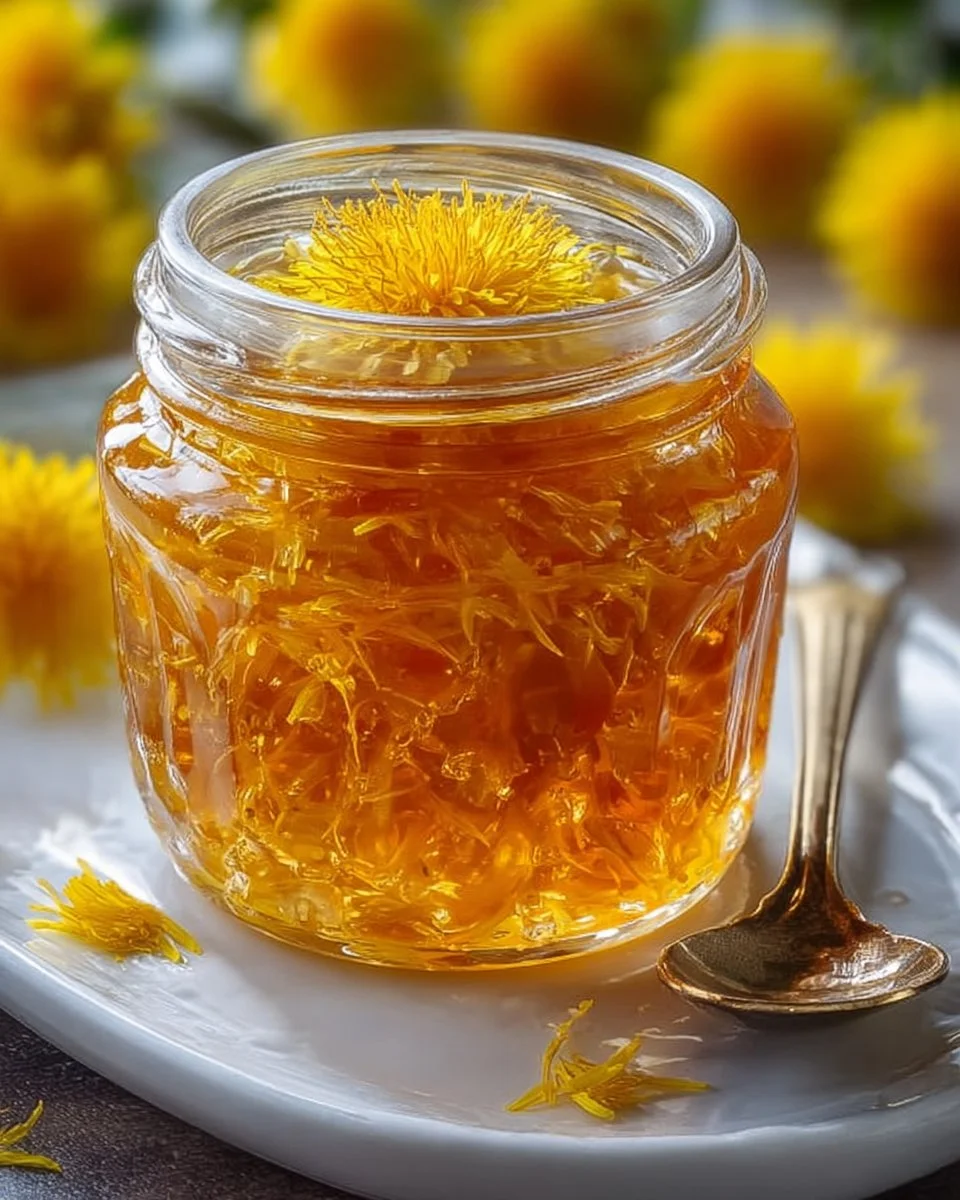
I still remember the first spoonful of this golden jelly — sunlight trapped in glass, bright and honeyed on my tongue. It tastes like a late-spring meadow: floral, slightly herbaceous, and clean, with a gentle citrusy lift that makes the sweetness sing instead of shout. The texture glides smooth and glossy, a silken spread that holds its shape on warm toast and gleams jewel-like in the morning light.
Making dandelion jelly feels a little like gathering a secret. You wander a yard or field with a basket, collect those cheerful yellow heads, and transform them into something unexpectedly elegant and timeless. If you love the idea of turning humble weeds into pantry treasures, you might also enjoy the playful decadence of Apple Caramel Bombs, another recipe that celebrates simple ingredients with big flavor.
Why You’ll Love This Homemade Dandelion Jelly Recipe: A Delightful Treat
This dandelion jelly stands out because it takes an everyday, overlooked flower and turns it into a spread that tastes both nostalgic and sophisticated. The flavor balances floral sweetness with a fresh lemon tang, so it never feels too saccharine. The aroma lifts from the jar like a whisper of spring — warm, sunbaked florals with a citrusy edge that invites a second taste.
You’ll find this jelly perfect for breakfast and beyond. It brightens plain yogurt, elevates cream cheese, and pairs unexpectedly well with tangy cheeses. It works for guests and quiet mornings alike: the jars look postcard-pretty tied with twine, and the first spoonful always sparks conversation. If you relish culinary experiments that connect you to the seasons, this recipe rewards you with jars of golden goodness to share.
Preparation Phase & Tools to Use
The right tools make the process smooth and safe. Gather these essentials before you start:
- Large pot (at least 4–5 quarts): You need room to simmer petals and later to boil the jelly mixture without boiling over.
- Fine mesh sieve or cheesecloth: Strains the delicate yellow liquid cleanly, leaving any residue behind.
- Measuring cups and spoons: Accuracy matters when working with pectin and sugar.
- Sterilized canning jars, lids, and a water bath canner or large stockpot with a rack: Proper jars and processing preserve your jelly for months.
- Wooden spoon or heatproof silicone spatula: Stir gently but thoroughly when boiling sugar.
- Candy thermometer (optional): Helpful if you prefer precise temperature checks, though the cold-plate test works well.
- Bowls for petals and trimming: Keep mess contained as you remove green bits.
Practical preparation tips:
- Harvest dandelion petals on a dry morning after dew evaporates. Wet petals dilute the infusion and invite muddy flavors.
- Avoid lawns recently treated with pesticides or herbicides. Choose organic or wild areas you trust.
- Trim the green base promptly; the white parts add bitterness. Work over a bowl to collect petals efficiently.
Ingredients for Homemade Dandelion Jelly
- 2 cups dandelion petals (fully opened, yellow only)
- 4 cups water
- 1/4 cup lemon juice
- 1 box pectin (follow the type specified on the box; natural or powdered works)
- 4 cups sugar
Key ingredient notes and substitutions:
- Dandelion petals: Use only the bright yellow petals. The green bases contain bitter compounds; remove them carefully. If you can’t find enough fresh petals, freeze-picked petals briefly and thaw before using, but fresh gives the brightest flavor.
- Lemon juice: Freshly squeezed yields the cleanest acidity. Bottled lemon juice can work in a pinch but may dull the brightness.
- Pectin: Use the variety recommended on the box for jellies (commonly powdered). If you use low-sugar or no-sugar pectin, follow that product’s instructions and adjust sugar accordingly.
- Sugar: Traditional jelly needs sugar both for sweetness and to help the pectin set. You can experiment with less sugar using special pectins, but expect a looser set and altered preservation needs.
How to Make Homemade Dandelion Jelly
Follow these step-by-step instructions, and read the small tips tucked into a few steps to avoid common pitfalls.
-
Rinse and trim petals.
- Place the petals in a large bowl and gently rinse under cool running water to remove dirt and tiny insects.
- Remove the green parts at the base of each petal; they add bitterness. A swift pinch or a small paring knife works well. Tip: Work over a second bowl to catch petals and keep your workspace tidy.
-
Make the dandelion infusion.
- Combine the cleaned dandelion petals and 4 cups of water in a large pot.
- Bring to a boil, then reduce to a gentle simmer and cook uncovered for 30 minutes so the liquid turns a rich yellow and fragrant.
- Tip: Do not overcrowd the pot; give the petals space. Stir occasionally to release their essence.
-
Strain the petals.
- Pour the mixture through a fine mesh sieve lined with cheesecloth or a clean towel into a clean bowl or pot. Press gently to extract liquid but avoid forcing sediment through.
- Discard the used petals (they’ve given their flavor) or compost them.
-
Prepare the jelly base.
- In a clean pot, combine the strained dandelion liquid, 1/4 cup lemon juice, and the box of pectin. Whisk to dissolve pectin evenly.
- Bring the mixture to a full, rolling boil over high heat. A rolling boil will not subside when stirred.
-
Add the sugar and cook to set.
- Add 4 cups of sugar all at once and stir until it dissolves.
- Return to a rolling boil and boil hard for 1–2 minutes, stirring constantly. The mixture should thicken and look glossy.
- Tip: Keep stirring to prevent scorching. If you use a candy thermometer, aim for the temperature recommended by your pectin brand (often around 220°F, but follow package instructions).
-
Test for doneness.
- Place a small spoonful of jelly on a chilled plate (kept in the freezer). Let it cool a few seconds — if it wrinkles when pushed, it’s ready.
- If the mixture runs, boil another 30–60 seconds and test again.
-
Jar and seal.
- Ladle the hot jelly into sterilized jars, leaving 1/4 inch headspace. Wipe rims clean, place lids, and screw on bands fingertip-tight.
- Tip: Work quickly but safely; hot jelly seals best when jars are hot.
-
Process in a water bath.
- Place jars in a boiling water bath for 5–10 minutes (adjust for altitude per standard canning guidelines).
- Remove jars and let cool undisturbed for 12–24 hours. Check seals — lids should not flex up and down.
-
Store and enjoy.
- Label jars with date and keep in a cool, dark place. Refrigerate after opening.
Chef’s Notes & Helpful Tips
Make-ahead tips:
- You can make the dandelion infusion a day ahead and refrigerate it in a tightly sealed container. Reheat to boiling before proceeding to the pectin step.
- If you find yourself with more petals than the recipe calls for, double the recipe proportionally and process jars in the same way.
Cooking alternatives:
- Oven or air fryer don’t suit jelly-making; the stovetop offers precise control and even heat distribution. Preserve the oven for roasting other ingredients.
- If you prefer a more herbal profile, steep the petals with a few sprigs of fresh thyme or rosemary during the infusion and remove them before straining.
Customization ideas:
- Add a vanilla bean pod during the infusion and remove before jarring for warm, rounded notes.
- Stir in a splash of rose water (very small amount) after cooking for a perfumed finish.
- Mix dandelion jelly with a bit of apricot jam for a layered flavor on cheese boards.
Common Mistakes to Avoid
- Using green parts of the dandelion: They add bitterness and a soapy note. Always remove them thoroughly.
- Over- or under-cooking the pectin step: Boil hard for the recommended time. Under-cooking gives a runny jelly; over-cooking can break down pectin and also reduce yield.
- Skipping the cold plate test: Relying only on time can mislead, especially at different altitudes or with different pectin brands.
- Not sterilizing jars: Proper sterilization prevents spoilage. Cleanliness matters for shelf-stable jars.
- Harvesting from treated lawns: Pesticides contaminate flavor and safety — pick from trusted areas.
What to Serve With Homemade Dandelion Jelly
This jelly pairs beautifully across sweet and savory contexts. Try these ideas:
- Warm buttered toast: The classic. The jelly melts and spreads into every crumble of the bread.
- Goat cheese crostini: Spread a thin layer of goat cheese and top with a dollop of jelly; the tang meets floral sweetness perfectly.
- Yogurt parfait: Spoon jelly between layers of plain Greek yogurt and granola for bright, balanced breakfasts.
- Brie or Camembert: Serve a wheel warmed with jelly spooned over the top for an elegant appetizer.
- Roasted pork or chicken glaze: Brush a light coat in the last minutes of roasting for a glossy, floral finish.
- Scones and clotted cream: Elevate teatime with this country-style pairing.
- Oatmeal swirl: Stir a spoonful into warm oatmeal for natural sweetness and complex flavor.
- Ice cream topping: Warm slightly and drizzle over vanilla gelato for a floral dessert twist.
Storage & Reheating Instructions
- Pantry: Unopened, properly sealed jars keep for up to 12 months in a cool, dark pantry. Label with the date.
- Refrigerator: After opening, store in the fridge and use within 4–6 weeks for best flavor.
- Freezer: Spoon jelly into freezer-safe containers leaving headspace; freeze up to 6 months. Thaw in the refrigerator.
- Reheating: Gently warm jelly in a small saucepan or microwave-safe bowl to loosen before spooning. Avoid boiling once opened to preserve texture and flavor.
Estimated Nutrition Information
Approximate values per tablespoon (15 g):
- Calories: 55 kcal
- Carbohydrates: 14 g
- Sugars: 14 g
- Fat: 0 g
- Protein: 0 g
- Sodium: 0–2 mg
Nutrition estimate disclaimer: These values are approximate and depend on exact yield, sugar brand, and amount of liquid extracted. If you have strict dietary needs, consider calculating using precise measurements and the specific products you use.
FAQs
Q: Can I use dandelion leaves instead of petals?
A: No. Leaves have a much stronger, bitter, and green flavor that overwhelms the delicacy of a jelly. Stick to the yellow petals for the floral, sweet profile you expect.
Q: How many jars does this recipe make?
A: Yield varies by how concentrated your infusion becomes and how much liquid you extract when straining. Expect roughly 4–6 half-pint jars, but measure your final liquid volume to know for sure. If you need a precise number, scale the recipe to the volume you collect.
Q: Can I reduce the sugar for a lower-sugar jelly?
A: You can, but traditional pectin requires sugar to set and to help preserve the jelly. Use a low-sugar pectin formulated for reduced-sugar preserves and follow that product’s instructions. Expect a softer set and a shorter pantry shelf-life.
Q: My jelly turned out too runny. What went wrong?
A: The most common causes are under-boiling the pectin/sugar mixture, using expired pectin, or not bringing the mixture to a full rolling boil. Reboil the batch with an additional teaspoon of pectin dissolved in a bit of water, then retest on a chilled plate.
Q: Does dandelion jelly taste like honey?
A: It can evoke honey-like warmth and sweetness, but it also carries unique floral and lightly herbaceous notes. The lemon juice brightens the flavor so the sweetness doesn’t become cloying.
Q: Can I add spices or herbs during infusion?
A: Yes — add a small sprig of thyme, a split vanilla bean, or a cinnamon stick during infusion for complex flavors. Remove them before jarring. Start small: these additions can easily dominate the floral base.
Q: Is it safe to use petals from city parks?
A: Exercise caution. Parks may have pesticide exposure or vehicle pollution near roads. Choose petals from private gardens, certified organic fields, or rural meadows you trust.
Conclusion
I hope this recipe inspires you to step outside with a basket, gather sunlight, and turn it into something you can spread on your morning bread. Dandelion jelly brings a little magic to the table — floral, bright, and utterly charming — and it makes generous gifts for friends who appreciate edible adventures. If you enjoy transforming flowers into seasonal sips, you might like this Homemade Dandelion Wine Recipe: Easy & Sweet Summer Drink for another way to celebrate dandelions in the jar.
Print
Homemade Dandelion Jelly
- Prep Time: 15 minutes
- Cook Time: 30 minutes
- Total Time: 45 minutes
- Yield: 4–6 half-pint jars 1x
- Category: Jelly
- Method: Canning
- Cuisine: American
- Diet: Vegan
Description
A delightful floral jelly made from dandelion petals, perfect for spreading on toast or pairing with creamy cheeses.
Ingredients
- 2 cups dandelion petals (fully opened, yellow only)
- 4 cups water
- 1/4 cup lemon juice
- 1 box pectin (follow the type specified on the box; natural or powdered works)
- 4 cups sugar
Instructions
- Rinse and trim petals.
- Combine the cleaned dandelion petals and 4 cups of water in a large pot.
- Bring to a boil, then reduce to a gentle simmer and cook uncovered for 30 minutes.
- Pour the mixture through a fine mesh sieve into a clean bowl or pot.
- In a clean pot, combine the strained dandelion liquid, 1/4 cup lemon juice, and the box of pectin.
- Bring the mixture to a full, rolling boil over high heat.
- Add 4 cups of sugar all at once and stir until it dissolves.
- Return to a rolling boil and boil hard for 1–2 minutes, stirring constantly.
- Place a small spoonful of jelly on a chilled plate to test for doneness.
- Ladle the hot jelly into sterilized jars, leaving 1/4 inch headspace.
- Process in a boiling water bath for 5-10 minutes.
- Label jars with date and keep in a cool, dark place.
Notes
Avoid using green parts of dandelions, as they add bitterness. Proper sterilization of jars is crucial for preserving the jelly.
Nutrition
- Serving Size: 1 tablespoon
- Calories: 55
- Sugar: 14g
- Sodium: 2mg
- Fat: 0g
- Saturated Fat: 0g
- Unsaturated Fat: 0g
- Trans Fat: 0g
- Carbohydrates: 14g
- Fiber: 0g
- Protein: 0g
- Cholesterol: 0mg