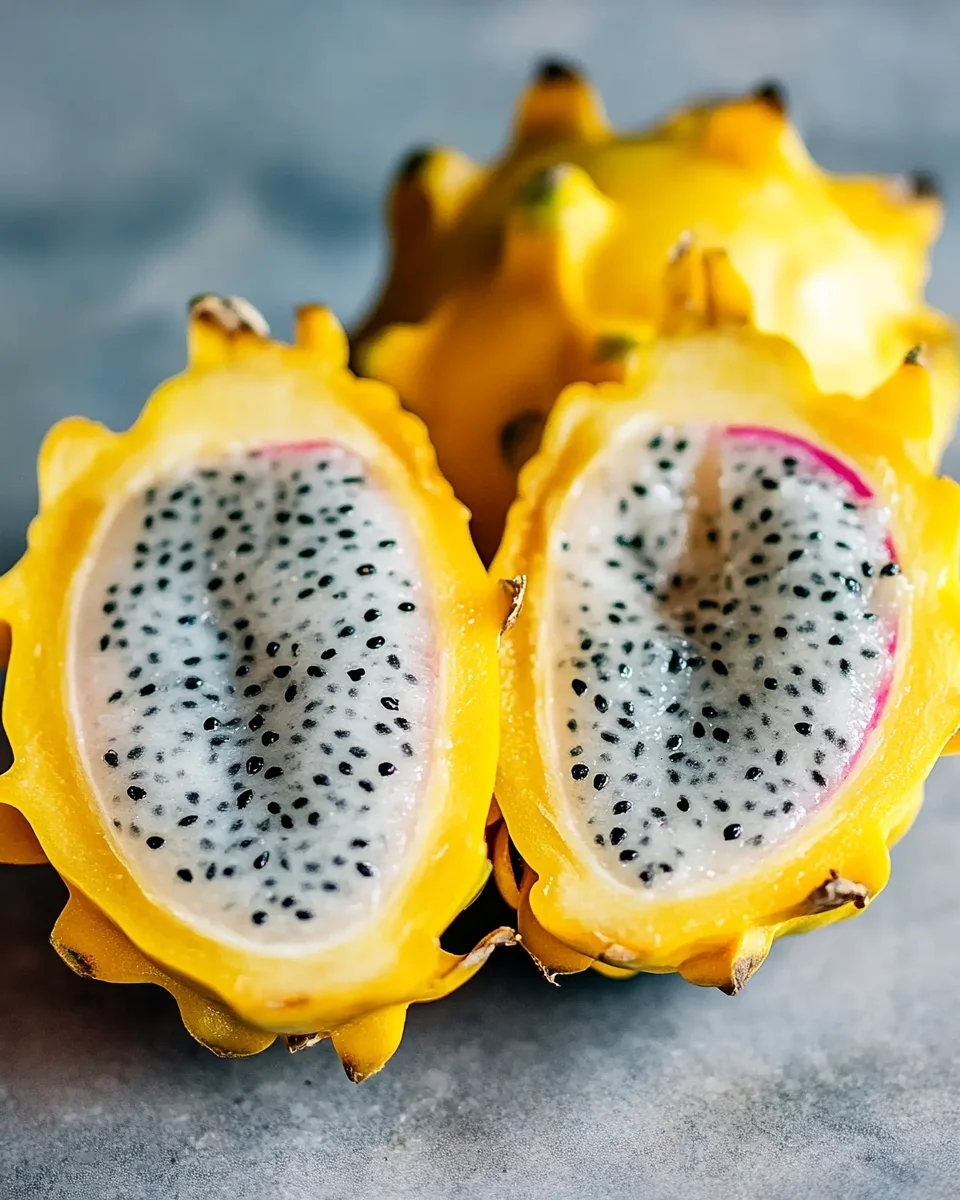
Yellow dragon fruit is one of the most underrated tropical fruits out there. Bursting with flavor, packed with nutrients, and incredibly photogenic, this exotic fruit also known as pitaya amarilla has quickly become a favorite among health-conscious foodies, smoothie lovers, and creative cooks alike.
In this article, we’re diving deep into everything you need to know about yellow dragon fruit. From its nutritional benefits and unique taste to a creamy yogurt bowl recipe you’ll want to make on repeat, we’ve got you covered. You’ll also discover practical prep ideas, fun recipe twists, common health concerns, and where to find the freshest yellow dragon fruits.
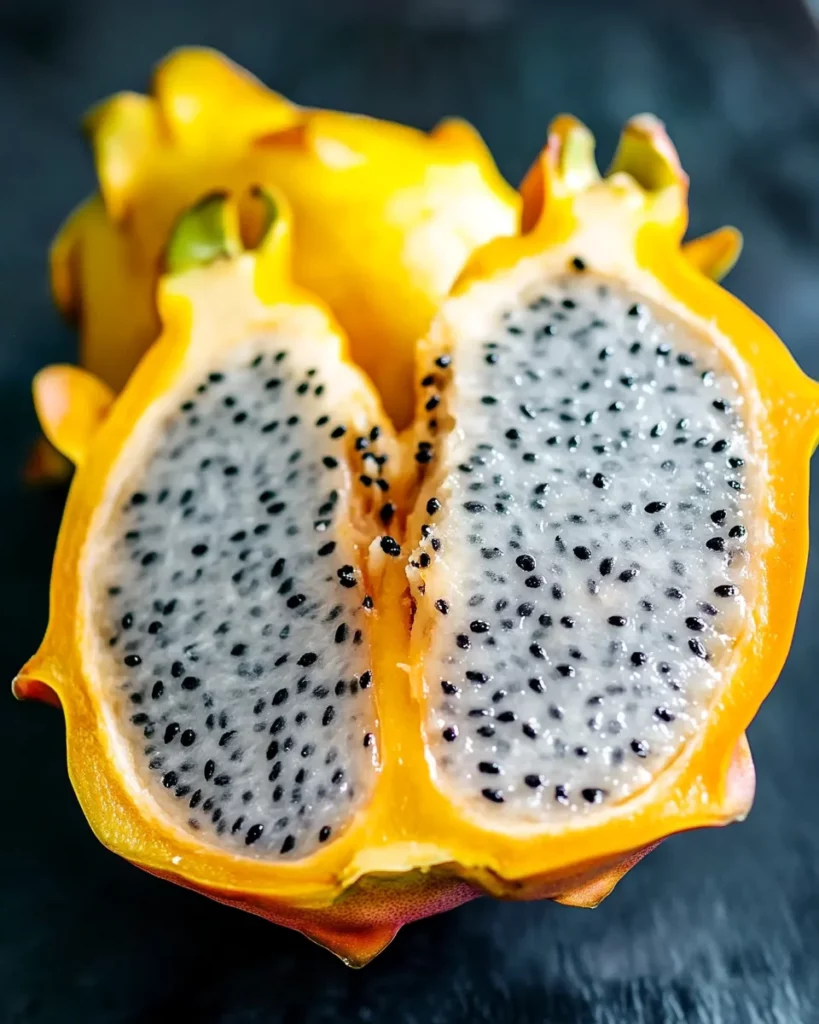
Table of Contents
What is Yellow Dragon Fruit?
Origin and Botanical Background
Yellow dragon fruit comes from the Hylocereus megalanthus species, a cactus native to South America. Unlike the more common pink-skinned varieties, yellow dragon fruit sports a bright, golden-yellow peel and spiky tips. It’s also smaller in size but packs an even sweeter punch.
This fruit thrives in tropical climates such as Ecuador, Colombia, and parts of Asia. Because of its unique growing conditions, it’s often considered a luxury fruit in many countries, commanding higher prices due to limited availability.
Types of Dragon Fruit: Yellow vs. Red vs. White
Dragon fruits come in several vibrant colors, and the difference isn’t just skin-deep. Here’s a quick comparison table to help you distinguish the types:
| Type | Skin Color | Flesh Color | Taste | Seed Size |
|---|---|---|---|---|
| Yellow Dragon Fruit | Bright Yellow | White | Super Sweet | Small |
| Red Dragon Fruit | Pink-Red | Red | Mildly Sweet | Medium |
| White Dragon Fruit | Pink | White | Mild and Refreshing | Medium |
Nutritional Benefits
Vitamin, Mineral, and Fiber Content
Yellow dragon fruit isn’t just pretty to look at—it’s loaded with essential nutrients. A single serving (about 100g) of this fruit provides:
- Vitamin C: Strengthens the immune system and helps with skin health
- Fiber: Promotes digestion and regulates blood sugar
- Magnesium: Supports nerve and muscle function
- Antioxidants: Helps combat oxidative stress and inflammation
What makes yellow dragon fruit stand out is its high vitamin C and fiber content, which play a major role in maintaining gut health and boosting immunity. It’s an excellent choice for anyone seeking a natural energy source without the crash from processed sugars.
| Nutrient | Amount per 100g |
|---|---|
| Calories | 60 |
| Fiber | 3g |
| Vitamin C | 20–30% RDA |
| Magnesium | 10% RDA |
| Protein | 1–2g |
This fruit is low in calories, contains no cholesterol, and is naturally fat-free—making it an ideal snack for clean eaters and weight watchers alike. Plus, the antioxidants found in yellow dragon fruit, like betalains and flavonoids, help fight free radicals.
Digestion and Immunity
One of the most celebrated benefits of yellow dragon fruit is its positive impact on digestive health. Thanks to its high fiber and water content, it can help regulate bowel movements and relieve mild constipation. That’s why it’s often added to natural detox or digestive support recipes.
Also, its antimicrobial properties make it a natural protector against harmful gut bacteria. Combined with its immune-boosting Vitamin C, it’s no surprise that health-conscious folks are adding this tropical fruit to their daily routines.
What Does Yellow Dragon Fruit Taste Like?
Comparing Flavor Profiles: Yellow vs. Pink Dragon Fruit
If you’ve tried pink or white dragon fruit before, you might expect yellow dragon fruit to have a similar mild flavor. Surprise—yellow dragon fruit is much sweeter. It’s often described as honey-like, with a floral, tropical twist that melts in your mouth.
| Type | Flavor Notes | Sweetness (1–10) |
|---|---|---|
| Yellow Dragon Fruit | Honeyed, tropical, floral | 9–10 |
| Red Dragon Fruit | Subtly sweet, berry-like | 6–7 |
| White Dragon Fruit | Mild, cucumber-like | 4–5 |
The yellow variety is known for its intensely sweet and juicy flesh, making it ideal for desserts, smoothie bowls, and fruit salads. It’s the preferred choice when you’re after flavor without needing added sugar or sweeteners.
Many describe the taste as a cross between a ripe pear and kiwi, with a slightly citrusy finish. That vibrant sweetness makes it a standout ingredient in low-sugar recipes.
Sweetness Levels and Texture Explained
Yellow dragon fruit has a smooth, jelly-like texture, filled with tiny edible black seeds that add a fun crunch. The seeds are similar to kiwi seeds, providing omega-3 fatty acids and fiber.
Unlike red or white types that sometimes fall flat in taste, yellow dragon fruit is so sweet that people often eat it straight with a spoon. It’s a perfect standalone snack or an enhancement to smoothie-based drinks like matcha avocado smoothies.
How to Eat Yellow Dragon Fruit
Can You Eat Raw Yellow Dragon Fruit?
Yes, absolutely! Yellow dragon fruit is best enjoyed raw. In fact, most people prefer eating it fresh to preserve its natural sweetness, juicy texture, and nutrient content.
Here’s how to enjoy it raw:
- Wash the outer skin thoroughly to remove any pesticides or dirt.
- Cut it in half lengthwise with a sharp knife.
- Scoop out the flesh using a spoon or melon baller. You can dice it, slice it, or eat it right out of the shell.
- Serve it alone or with a squeeze of lime juice for added tang.
It’s safe to eat raw and contains no toxic compounds—unlike some tropical fruits. The seeds are also edible and packed with fiber and healthy fats.
Pro Tip: Chill the fruit before slicing—it brings out the flavor and makes it a refreshing treat for hot days.
Best Ways to Prepare and Serve
There are countless ways to enjoy this exotic gem beyond just scooping and eating. Here are popular serving ideas:
- Yogurt Fruit Bowls – Like our recipe below, yellow dragon fruit pairs beautifully with Greek yogurt or plant-based alternatives.
- Smoothies & Smoothie Bowls – Blend with banana, pineapple, or mango for a tropical blast.
- Fruit Salads – Toss with watermelon, kiwi, and strawberries for color and crunch.
- Dessert Toppings – Spoon onto cakes, tarts, or cheesecakes.
- Infused Water or Ice Cubes – Dice and freeze into water for a fancy hydration boost.
Want something creative? Don’t miss our twist on pink salt detox recipes like this fruity pink salt trick that pairs well with fresh tropical fruits.
Whether raw or as part of a creative dish, yellow dragon fruit is a versatile superstar that elevates anything it touches.
Creamy Fruit Bowl Delight
Ingredients Overview
This refreshing yellow dragon fruit bowl combines creamy textures with tropical sweetness for a delicious, energizing start to your day—or a guilt-free dessert. The best part? It’s packed with nutrients and can be made dairy-free.
Here’s what you’ll need:
- 1 ripe yellow dragon fruit, halved and scooped
- ½ cup Greek yogurt (or coconut yogurt for a dairy-free option)
- 1 tablespoon honey or agave syrup
- ½ teaspoon fresh lime juice
- ¼ cup granola or crushed nuts (almonds, walnuts)
- Fresh mint leaves for garnish
Feel free to swap ingredients based on dietary needs. For example, agave makes this bowl 100% vegan, and coconut yogurt adds a tropical creaminess.
Step-by-Step Instructions
1. Prepare the Fruit
Cut your yellow dragon fruit in half. Using a spoon, scoop out the flesh and dice into small cubes. For a creamier texture, blend it for a few seconds until smooth.
2. Mix with Yogurt
In a medium-sized bowl, combine the diced or blended dragon fruit with Greek yogurt. Add honey and lime juice. Stir gently until well combined.
3. Add Crunch
Top the bowl with granola or crushed nuts. This adds texture and a nutty balance to the fruit’s natural sweetness.
4. Garnish and Serve
Finish with fresh mint leaves for color and a burst of cool flavor. Serve immediately for best texture and freshness.
| Nutrition (approx. per serving) | Amount |
|---|---|
| Calories | 250 |
| Protein | 10g |
| Fiber | 4g |
| Natural Sugars | 15g |
Check out our viral creamy high-protein creations like this cottage cheese bagel bowl to mix and match with your fruity yogurt bowls!
Optional Add-Ins
- Chia seeds for fiber and omega-3s
- Shredded coconut for more tropical flair
- A drizzle of almond butter for protein and richness
Whether it’s a quick breakfast or an afternoon snack, this yellow dragon fruit bowl hits the sweet spot between flavor and nourishment.
Health Concerns – Why Does My Stomach Hurt After Eating?
Possible Allergic Reactions or Side Effects
While yellow dragon fruit is generally safe and healthy for most people, some individuals may experience mild digestive discomfort after eating it. The most common reasons include:
- High Fiber Content: One serving of yellow dragon fruit contains up to 3g of fiber. If you’re not used to a high-fiber diet, this sudden increase can cause bloating, gas, or cramping.
- Natural Laxative Effect: The combination of fiber and water can mildly stimulate the digestive system. This can lead to looser stools or a quicker bowel movement—especially if you eat a large amount at once.
- Fructose Sensitivity: Some people are sensitive to natural sugars like fructose, which is found in dragon fruit. This can lead to temporary stomach pain or discomfort.
- Rare Allergic Reactions: While extremely rare, some may experience itching, swelling, or a rash after eating tropical fruits, including dragon fruit. If symptoms persist, consult a healthcare provider.
Tip: Start with small portions—especially if you’re introducing it into your diet for the first time. Also, pair it with yogurt or protein (like in our fruit bowl recipe) to slow digestion and reduce sensitivity.
Tips to Reduce Digestive Discomfort
If you’ve experienced an upset stomach after eating yellow dragon fruit, try these strategies:
- Hydrate properly before and after consumption.
- Eat smaller portions and gradually increase over time.
- Avoid pairing with other high-fiber fruits initially.
- Check for over-ripeness—spoiled fruit can ferment and cause gas.
Creative Ways to Use
Smoothies, Desserts, and Salad Add-ons
Yellow dragon fruit’s naturally sweet and juicy profile makes it incredibly versatile in the kitchen. Whether you’re blending, baking, or tossing it into salads, here are some creative ways to make this exotic fruit shine:
- Tropical Smoothie Bowls – Combine yellow dragon fruit with frozen mango, banana, and coconut milk for a bold, bright, and nutritious breakfast bowl. Add chia seeds and top with granola.
- Frozen Popsicles – Blend yellow dragon fruit with lime juice and a bit of agave syrup. Freeze into popsicle molds for a refreshing, low-calorie treat.
- Dragon Fruit Salsa – Dice and mix with pineapple, red onion, cilantro, and lime for a fruity salsa that pairs wonderfully with grilled fish or chicken.
- Fruit Salad Enhancer – Toss into a bowl with kiwi, strawberries, blueberries, and a drizzle of honey. It adds color, fiber, and that irresistible floral sweetness.
- Dessert Garnish – Dice and use as a topping for panna cotta, Greek yogurt cheesecake, or parfaits.
Fusion Ideas: Breakfasts, Snacks, Mocktails
Don’t stop at desserts—yellow dragon fruit brings flair to meals across the day:
- Breakfast Toasts – Spread almond or peanut butter on toast, then layer with sliced yellow dragon fruit and a sprinkle of chia.
- Chia Pudding Parfaits – Alternate layers of chia pudding, yellow dragon fruit, and coconut flakes for a dairy-free delight.
- Fruit-infused Mocktails – Muddle yellow dragon fruit with mint, lime, and sparkling water. Add a splash of coconut water for a tropical twist.
- Energy Balls – Mix diced dragon fruit with dates, oats, and shredded coconut for no-bake bites perfect for snacking.
- Dragon Fruit Yogurt Dips – Blend into Greek yogurt with honey and cinnamon to create a naturally sweet fruit dip.
Where to Buy and How to Choose a Ripe
Supermarket, Farmer’s Market, and Online Tips
Yellow dragon fruit used to be rare outside of tropical regions, but today it’s more accessible than ever thanks to global imports and online grocery services.
Here’s where you can reliably find it:
- Specialty Grocery Stores – Look for it at Whole Foods, Sprouts, or international markets that stock Latin American or Asian produce.
- Farmer’s Markets – In warmer U.S. states like California, Texas, and Florida, local growers may offer fresh, organically grown yellow dragon fruit during peak season (summer and early fall).
- Online Produce Shops – You can order it fresh from websites like Melissa’s Produce, Miami Fruit, and Amazon Fresh. Look for “Hylocereus megalanthus” in product descriptions.
Tip: When buying online, check for customer reviews and shipping timelines to ensure you get the freshest quality possible.
Discover great ideas like our full detox drink roundups such as pink salt trick recipes to complement your tropical fruit purchases.
Ripeness Signs and Storage Tips
Choosing a ripe yellow dragon fruit ensures the best flavor and texture. Here’s how to tell:
✅ Signs of Ripeness:
- The skin is bright yellow without too much green.
- The “spikes” or tips are slightly softened or beginning to brown.
- When gently squeezed, the fruit should yield slightly—like a ripe kiwi or avocado.
- Avoid ones that feel too mushy or have large dark blotches (overripe).
🧊 Storage Tips:
- Whole: Store at room temperature if you plan to eat within 2–3 days.
- Cut/Open: Keep in an airtight container in the fridge for up to 2 days.
- Frozen: You can cube and freeze yellow dragon fruit for smoothies or future use—just know it’ll lose a bit of its original texture.
Looking for a way to use frozen fruit? Try it in recipes like vegan cold coffee where creamy or icy textures enhance the experience.
Sustainability and Farming of Yellow Dragon Fruit
Farming Practices and Environmental Impact
Yellow dragon fruit, or pitaya amarilla, is primarily grown in Central and South America, as well as Southeast Asia. Because it comes from a cactus species, it requires less water and fertilizer than many other fruits, making it a more sustainable crop when managed properly.
Sustainable farming practices include:
- Organic cultivation using compost and natural pest repellents
- Drip irrigation systems to reduce water waste
- Rotational farming techniques to maintain soil health
- Minimal pesticide use due to the fruit’s natural resistance to pests
Some farms are now using vertical trellising systems that reduce land usage while increasing yields. This not only helps farmers maximizeFor more creative baking inspiration and marketing ideas, explore the Pinterest
smaller spaces but also promotes healthier plant growth and easier harvesting.
Consumers can support sustainable production by choosing:
- Certified organic or fair-trade fruit
- Produce grown by small-scale farmers in regions known for eco-conscious agriculture
- Yellow dragon fruit from local markets when in season to reduce transport emissions
Check out our guide on smart kitchen choices like blue salt benefits and uses, which also support sustainable living through mindful ingredient selection.
Supporting Local Growers
Buying from local farmers not only supports regional economies but also ensures you’re getting the freshest and most nutrient-dense fruit possible. Here’s how to identify and support responsible growers:
- Ask vendors about growing practices at farmer’s markets
- Look for farmers’ cooperatives that pool resources and share eco-friendly techniques
- Follow local farms on social media or subscribe to CSA (Community Supported Agriculture) boxes
- Check online directories that highlight sustainable and organic farms in your area
By being a conscious consumer, you help fuel the movement for better agriculture—one sweet, yellow dragon fruit at a time.
FAQs
What do you do with yellow dragon fruit?
You can eat yellow dragon fruit raw by simply scooping it out with a spoon, or slice and dice it for fruit salads, smoothies, yogurt bowls, or popsicles. It’s also great in salsas, parfaits, and even as a topping for desserts. The options are endless thanks to its tropical sweetness and versatility.
Why does my stomach hurt after eating yellow dragon fruit?
Some people may experience mild digestive discomfort due to the high fiber content, especially if consumed in large quantities. In rare cases, a slight sensitivity to natural sugars like fructose may cause bloating or cramps. Starting with smaller portions and staying hydrated usually prevents these issues.
Does a yellow dragon fruit taste different?
Yes! Yellow dragon fruit is significantly sweeter than red or white varieties. It has a honeyed, floral taste with tropical notes, often described as a blend of pear, kiwi, and citrus. It’s ideal for desserts and snacks that don’t require added sugar.
Can you eat raw yellow dragon fruit?
Absolutely. In fact, yellow dragon fruit is best enjoyed raw to retain its flavor and nutrients. Just slice it in half, scoop out the flesh, and enjoy. You can also blend it into smoothies or mix it with yogurt for a creamy tropical treat.
Conclusion
Yellow dragon fruit isn’t just another pretty tropical fruit—it’s a powerhouse of flavor, fiber, antioxidants, and versatility. Whether you eat it raw, blend it into smoothies, or showcase it in a yogurt bowl like our signature recipe, it’s an easy, nutrient-rich way to elevate your meals.
From digestive benefits to low-calorie sweetness and sustainability, yellow dragon fruit checks every box for the health-savvy and flavor-obsessed. Ready to give your fruit bowl a makeover? Don’t wait—add some golden goodness to your grocery list.
Don’t miss our full collection of delicious wellness-friendly recipes like this pink salt detox smoothie that pairs perfectly with exotic fruits like yellow dragon fruit.
Print
yellow dragon fruit recipe
- Prep Time: 5 minutes
- Cook Time: 0 minutes
- Total Time: 5 minutes
- Yield: 1–2 servings 1x
- Category: Snack, Breakfast, Dessert
- Method: No-cook
- Cuisine: Tropical, Fusion
- Diet: Vegetarian
Description
Yellow dragon fruit is one of the most underrated tropical fruits out there. Bursting with flavor, packed with nutrients, and incredibly photogenic, this exotic fruit also known as pitaya amarilla has quickly become a favorite among health-conscious foodies, smoothie lovers, and creative cooks alike.
Ingredients
1 ripe yellow dragon fruit, halved and scooped
½ cup Greek yogurt (or coconut yogurt for a dairy-free option)
1 tablespoon honey or agave syrup
½ teaspoon fresh lime juice
¼ cup granola or crushed nuts (almonds, walnuts)
Fresh mint leaves for garnish
Instructions
Prepare the fruit – Slice the yellow dragon fruit in half and scoop out the flesh using a spoon. Dice it into small cubes or blend for a smoother texture.
Mix with yogurt – In a medium bowl, combine the dragon fruit with Greek yogurt, honey, and lime juice. Stir until well combined.
Add crunch – Sprinkle granola or crushed nuts on top for added texture.
Garnish and serve – Add a few fresh mint leaves for a burst of flavor and visual appeal. Serve immediately and enjoy!
Notes
For extra sweetness, add an additional drizzle of honey or a few sliced bananas.
For a smoothie version, blend all ingredients with a splash of coconut milk for a tropical drink.
For a sorbet, freeze the blended dragon fruit mixture for 1-2 hours, then scoop and serve.
Make it vegan by using coconut yogurt and agave syrup.
Nutrition
- Serving Size: 1 bowl
- Calories: 210 kcal
- Sugar: 18g
- Sodium: 40mg
- Fat: 6g
- Saturated Fat: 2g
- Unsaturated Fat: 4g
- Trans Fat: 0g
- Carbohydrates: 30g
- Fiber: 4g
- Protein: 8g
- Cholesterol: 5mg (or 0mg if using coconut yogurt)