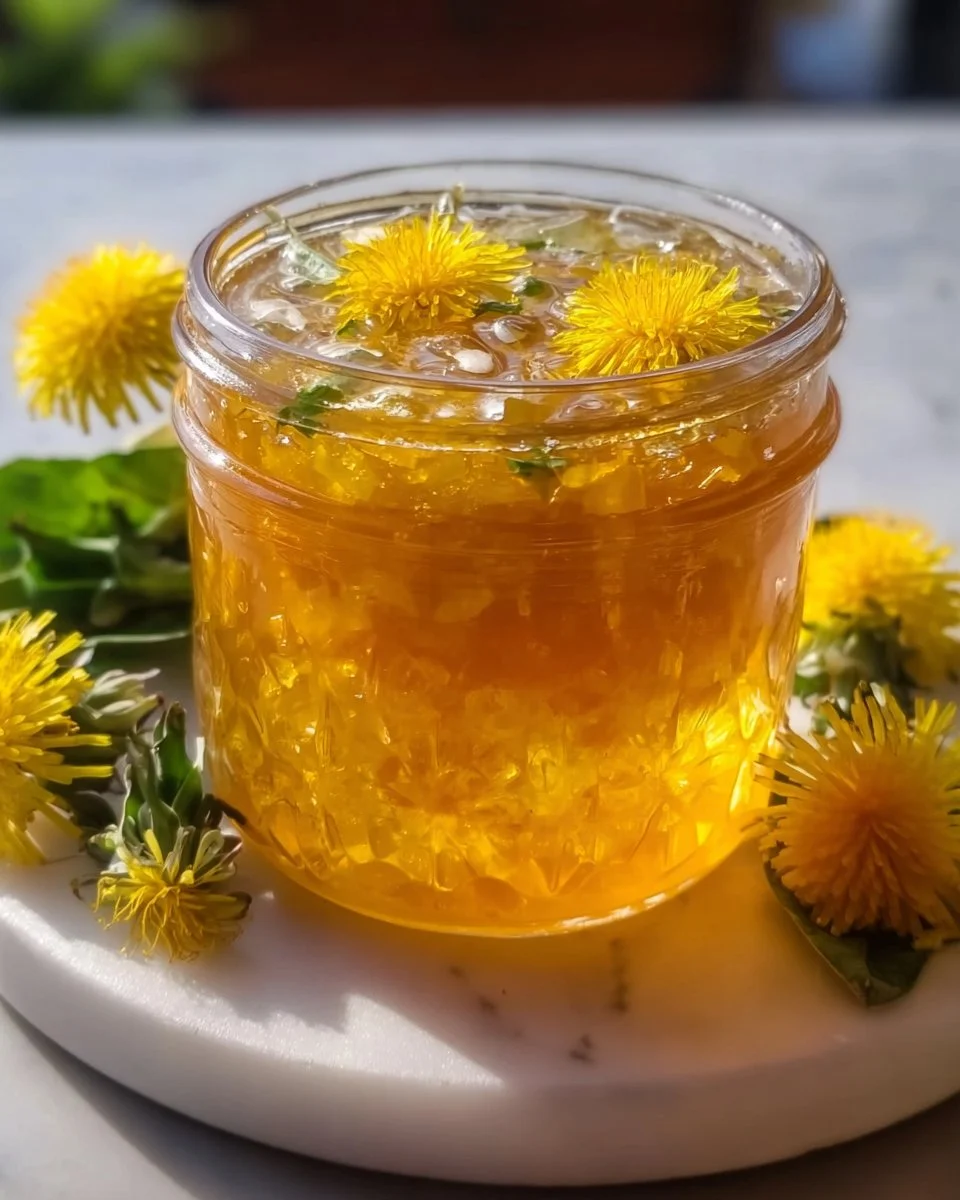
The first spoonful of this dandelion jelly feels like sunlight condensed into a jar. Bright, floral notes lift across your tongue, followed by a subtle honeyed warmth and a clean citrus zip from lemon. The texture turns between silky and slightly jammy — not cloying, but luxuriously spreadable, with a shimmering amber color that catches light like spring in a glass jar.
Foragers know that spring offers small, brilliant surprises, and this jelly celebrates one of the most humble: dandelion petals. If you enjoy playful, seasonal preserves and the kind of recipes that make you smile while you work, you’ll find this jelly both nostalgic and unexpectedly sophisticated. If you want another fresh-from-the-garden inspiration, check out this Italian Grinder Salad recipe that layers crisp greens with bright, herbaceous dressing — it pairs beautifully with a toast topped with dandelion jelly.
Why You’ll Love This Delight in Fresh Dandelion Jelly: A Springtime Treasure
Dandelion jelly tastes like spring itself: floral but grounded, sweet but lively. It brings a unique nuance to classic preserves — imagine marmalade with petals of wildflower perfume instead of bitter peel. The honey adds round, golden sweetness while the lemon juice sharpens the flavor and helps the pectin do its job. This jelly stands out at brunch, on picnic bread, or as an unexpected condiment alongside roast pork or creamy cheeses.
You’ll love how approachable the process feels. You don’t need elaborate equipment to make something that looks and tastes artisanal. Foraging gives the recipe an instant backstory you’ll enjoy sharing: every jar holds a memory of sun on your face and green grass underfoot. Serve it as a highlight ingredient — a spoonful can elevate yogurt, dressings, and glazes in ways you won’t predict until you taste it.
Preparation Phase & Tools to Use
Making dandelion jelly calls for a few simple but specific tools. Each one helps you capture the petals’ delicate aroma and turn an infusion into a clear, beautiful jelly.
- Large heatproof bowl or jar: You steep the petals in boiling water; use something roomy so the petals float and release flavor.
- Fine mesh strainer and cheesecloth or a jelly bag: Straining removes tiny particles and yields a clear infusion that sets to a clean-looking jelly.
- Heavy-bottomed pot: You need even heat during the boil to fully activate the pectin and dissolve sugar without burning.
- Candy or instant-read thermometer: Helpful for checking temperature when testing for gel, though the sheet test works well too.
- Measuring cups and spoons: Accurate amounts matter for pectin to work right.
- Wooden spoon or heatproof spatula: Useful to stir without scratching cookware.
- Mason jars and lids, plus a canning rack or towel: Sterilize jars and process in a water bath if you plan to shelf-stable your jelly.
Practical preparation tips:
- Harvest petals on a dry, sunny morning: the essential oils and aroma peak after the dew dries.
- Remove green parts of the flower (the bitter bases); those bring astringency.
- Sterilize jars while you make the jelly: hot jars preserve clarity and prevent sudden temperature shifts.
- Keep a small bowl of ice water nearby to test gelling with a chilled spoon.
Ingredients for Delight in Fresh Dandelion Jelly: A Springtime Treasure
- 2–4 cups Dandelion Petals (Gather from pesticide-free areas.)
- 4 cups Water (Boiling water for steeping.)
- ¼ cup Lemon Juice (Freshly squeezed.)
- 1 package Powdered Pectin (High-methoxyl pectin preferred.)
- 3–4 cups Sugar (Provides sweetness.)
- 1 cup Honey (Natural sweetener alternative.)
- to taste Fresh Herbs (like mint or basil) (For added flavor.)
Key ingredient notes and substitutions:
- Dandelion Petals: Only use petals from clean, chemical-free areas. Remove any green base to avoid bitterness. If dandelions aren’t available, consider substituting mild edible blossoms like calendula for a different floral profile.
- Water: Use filtered water for the clearest infusion and purest flavor.
- Lemon Juice: Fresh lemon provides acidity that helps pectin gel and brightens the flavor. Bottle juice won’t perform as reliably for gelling.
- Powdered Pectin: Use high-methoxyl pectin (the common boxed variety) designed to gel with sugar and acid. If you have low-methoxyl pectin, follow its special instructions — it needs calcium to set.
- Sugar and Honey: Sugar is the primary gelling partner for high-methoxyl pectin. The recipe blends sugar with honey for complexity. You can use less sugar if you accept a softer set; if you reduce sugar a lot, the jam may not gel properly.
- Fresh Herbs: Mint or basil adds a bright, green counterpoint. Add sparingly — herbs can overpower delicate petals.
How to Make Delight in Fresh Dandelion Jelly: Step-by-Step Instructions
Harvest and clean petals:
- Pick fully open dandelion flowers from pesticide-free areas.
- Pull petals away from the green base; discard the green bits.
- Rinse petals quickly under cool water and pat dry on a towel.
Make a dandelion infusion:
- Place petals in a heatproof bowl or jar.
- Pour 4 cups boiling water over the petals. Stir gently to submerge them.
- Cover and steep for 20–30 minutes until the liquid turns golden and fragrant.
- Tip: Longer steeping increases floral intensity, but too long can bring vegetal notes.
Strain the petals:
- Line a fine mesh strainer with cheesecloth (or use a jelly bag) and strain the infusion into a measuring cup or pot.
- Press gently to extract liquid but avoid forcing cloudy bits through. You want a clear, bright liquid.
Measure and prepare:
- Pour the strained infusion into a heavy-bottomed pot. Add the lemon juice.
- Measure the volume of liquid; you need enough to match the pectin and sugar quantities. Adjust sugar amount according to total liquid volume (3–4 cups sugar is a guideline for roughly 4 cups of liquid).
Mix pectin and sugar:
- Sprinkle the powdered pectin into the cold infusion and whisk immediately to dissolve. Some recipes call for combining pectin with a bit of sugar first to prevent clumping.
- Stir in honey and then add the sugar gradually, stirring constantly.
Bring to a rolling boil:
- Heat over high, stirring continuously. Bring to a full, rolling boil that cannot be stirred down.
- Boil hard for 1–2 minutes (follow the pectin package guidance) to activate gelling power.
- Tip: Watch closely — sugar mixtures burn quickly once boiling.
Test for gel and finish:
- Remove from heat and skim any foam with a spoon for clearer jars.
- Do a chilled spoon test: dip a metal spoon into the jelly and set it in a bowl of ice water for 30 seconds; if it wrinkles when pushed, it’s ready.
- If not set, return to boil for another minute and test again.
Jar and process:
- Ladle hot jelly into hot, sterilized jars, leaving 1/4 inch headspace. Wipe rims, apply lids and bands.
- Process jars in a boiling water bath for 5–10 minutes (adjust for altitude) to create a good seal.
- Allow jars to cool upright for 12–24 hours. Check seals before storing.
Small tips sprinkled in the steps:
- If you want a delicate herb note, bruise a few mint leaves and add them to the infusion while steeping, removing before boiling.
- If foam forms, a teaspoon of butter can reduce foaming as you boil, but skim for aesthetics.
Chef’s Notes & Helpful Tips
Make-ahead tips:
- Infuse petals a day ahead and refrigerate the strained liquid covered; bring to a boil the next day when you’re ready to finish.
- You can make larger batches and can them for winter gifting — jars look magical with a ribbon.
Cooking alternatives:
- Oven: Use the oven to sterilize jars and lids by placing them on a tray at 250°F (120°C) for 10–15 minutes.
- Instant Pot: Use pressure cooking only to sterilize jars; do not attempt to boil the jelly in the Instant Pot as you need direct high heat to reach a rolling boil for pectin.
- Air fryer: An air fryer can warm jars for sterilization but cannot replace the water bath for shelf stability.
- Slow cooker: You can keep infused liquid warm in a slow cooker, but bring to a firm boil on the stovetop for accurate gelling.
Customization ideas:
- Herbal twist: Add a teaspoon of chopped basil or a few torn lemon balm leaves for a savory edge.
- Spicier profile: Stir in a pinch of ground ginger or a strip of orange zest with the lemon.
- Less sugar: Replace up to half the sugar with honey for a softer set; reduce expectations for firmness accordingly.
- Alcohol infusion: For a grown-up spread, stir a tablespoon of elderflower liqueur into the cool jelly before jarring.
Common Mistakes to Avoid
- Using the whole flower including the green base: The green calyx adds bitterness. Always remove it.
- Skipping the strain or pressing too hard: Forcing solids through the strainer makes cloudy jelly. Be gentle; the clearer the infusion, the clearer the final jelly.
- Not following pectin instructions: Different pectins behave differently. High-methoxyl pectin needs sugar and acid. Read the package and follow ratios and boil times.
- Boiling too gently: You must reach a rolling boil for pectin to activate. Boiling only gently will yield a runny preserve.
- Overcooking: Boil just long enough to activate the pectin. Prolonged boiling can darken color and flatten floral notes.
- Canning mistakes: Put jars into boiling water before filling? Don’t. Fill hot jars with hot jelly, then process. Make sure jars are fully submerged during the water bath.
What to Serve With Delight in Fresh Dandelion Jelly: Pairing Ideas
- Warm buttered toast or English muffins: The simplest, classic vehicle — the jelly melts into the bread, releasing floral aroma.
- Soft goat cheese crostini: The jelly’s floral sweetness balances the tang and creaminess of goat cheese beautifully.
- Scones or biscuits: Slather with clotted cream and dandelion jelly for an elevated tea experience.
- Roasted pork or glazed chicken: Use the jelly as a glaze or spoon over roasted meats to add a glossy, floral-sweet finish.
- Greek yogurt parfaits: Swirl a tablespoon into yogurt with granola for a brunch lift.
- Brie or Camembert: Serve a wedge of creamy cheese with a spoonful of jelly and crackers for an elegant appetizer.
- Salad vinaigrette: Whisk a teaspoon into vinaigrette for a sweet, floral lift that brightens bitter greens.
- Pancakes or waffles: Drizzle instead of maple syrup for a seasonal twist.
Storage & Reheating Instructions
- Refrigerator: Once opened, store the jar in the fridge. It keeps best for 3–4 weeks because the fresh floral notes fade over time.
- Pantry / shelf-stable: Properly processed and sealed jars can store in a cool, dark pantry for up to a year. Quality tastes best within 6 months.
- Freezer: Spoon jelly into freezer-safe containers, leaving headspace; freeze up to 12 months. Thaw in the refrigerator.
- Reheating: Warm gently in a small saucepan over low heat to loosen before using as a glaze. Do not reheat jars in a microwave. If you want to re-soften refrigerated jelly, microwave a small amount in a microwave-safe bowl in 10-second bursts, stirring between blasts.
Estimated Nutrition Information
Approximate per tablespoon (15 g) — values vary by exact sugar/honey ratio and portion size:
- Calories: 45–60 kcal
- Carbohydrates: 12–15 g
- Sugars: 11–14 g
- Protein: 0 g
- Fat: 0 g
- Fiber: 0 g
- Sodium: 0–2 mg
Disclaimer: These values are rough estimates. Exact nutrition depends on your specific ingredients and serving sizes. If you need precise nutrition facts, use a nutrition calculator with your measured ingredients.
FAQs
Q: Are dandelion petals safe to eat?
A: Yes, dandelion petals are edible and have a mildly floral, slightly honeyed flavor when separated from the bitter green base. Only harvest from areas you know are free of pesticides, herbicides, and heavy road pollution. Rinse petals gently and discard any that show insect damage or browning.
Q: When is the best time to harvest dandelions for jelly?
A: Pick flowers on a dry, sunny morning after the dew evaporates. The petals carry the freshest aromatic oils then. Avoid flowers that have gone to seed or have spent blooms; younger, fully open blooms yield the best color and fragrance.
Q: Can I use only honey instead of sugar?
A: You can sweeten with more honey, but traditional high-methoxyl pectin needs a certain sugar concentration to gel. Substituting all the sugar with honey will likely produce a softer set or no set at all. If you want a firmer jelly with less refined sugar, experiment with a pectin designed for low-sugar jams or follow a tested low-sugar pectin recipe.
Q: What if my jelly doesn’t set?
A: First, check that you used the correct type of pectin and followed the boiling time. If the mixture didn’t reach a full rolling boil, the pectin might not have activated. You can re-boil the jelly, add additional pectin according to package instructions, and test again. Alternatively, pour the cooled preserve into the fridge and use it as a spreadable syrup rather than a firm jelly.
Q: Can I include the whole flower for stronger flavor?
A: The green base (calyx) tastes bitter and can muddy the delicate floral note. If you crave more intensity, increase steeping time or add a touch more petals rather than leaving the green parts in. You can also add a small strip of citrus peel (removed before boiling) to boost aromatics without bitterness.
Q: Is processing in a water bath necessary?
A: If you plan to store jars at room temperature, process them in a boiling water bath to ensure a proper seal and safety. If you’ll refrigerate or freeze jars and use them quickly, you can skip the water bath, but expect shorter shelf life.
Q: Can I add other flowers or fruit to the recipe?
A: Absolutely. Calendula, rose petals, or elderflowers can complement or replace dandelions for a different profile. Adding a small amount of fruit like apple slices during the infusion can add body and natural pectin, but remove solids before boiling.
Conclusion
This dandelion jelly captures the bright optimism of spring and translates it into a jar you’ll reach for all season. It tastes like soft sunlight and warm afternoons, perfect with crusty bread or as an unexpected finishing touch on savory dishes. If you enjoy exploring wild flavors and simple seasonal projects, this recipe will reward patience and a careful hand.
For a short guide to safe foraging and other lovely spring finds that pair well with homemade preserves, see this helpful spring foraging guide. Give the jelly a try — and keep a basket handy the next time you wander the neighborhood for blooms.
Print
Delight in Fresh Dandelion Jelly: A Springtime Treasure
- Prep Time: 10 minutes
- Cook Time: 45 minutes
- Total Time: 55 minutes
- Yield: 4 cups 1x
- Category: Preserve
- Method: Canning
- Cuisine: American
- Diet: Vegetarian
Description
A unique and floral jelly made from dandelion petals, perfect for spreading on toast or using in culinary creations.
Ingredients
- 2–4 cups Dandelion Petals
- 4 cups Water
- ¼ cup Lemon Juice
- 1 package Powdered Pectin
- 3–4 cups Sugar
- 1 cup Honey
- to taste Fresh Herbs (like mint or basil)
Instructions
- Harvest and clean petals: Pick fully open dandelion flowers from pesticide-free areas. Pull petals away from the green base; discard the green bits. Rinse petals quickly under cool water and pat dry on a towel.
- Make a dandelion infusion: Place petals in a heatproof bowl or jar. Pour 4 cups boiling water over the petals. Stir gently to submerge them. Cover and steep for 20–30 minutes until the liquid turns golden and fragrant.
- Strain the petals: Line a fine mesh strainer with cheesecloth and strain the infusion into a measuring cup or pot. Press gently to extract liquid but avoid forcing cloudy bits through.
- Measure and prepare: Pour the strained infusion into a heavy-bottomed pot. Add the lemon juice. Measure the volume of liquid; you need enough to match the pectin and sugar quantities.
- Mix pectin and sugar: Sprinkle the powdered pectin into the cold infusion and whisk immediately to dissolve. Stir in honey and then add the sugar gradually, stirring constantly.
- Bring to a rolling boil: Heat over high, stirring continuously. Bring to a full, rolling boil that cannot be stirred down. Boil hard for 1–2 minutes to activate gelling power.
- Test for gel and finish: Remove from heat and skim any foam with a spoon. Do a chilled spoon test to check for gel. If not set, return to boil for another minute and test again.
- Jar and process: Ladle hot jelly into hot, sterilized jars, leaving 1/4 inch headspace. Process jars in a boiling water bath for 5–10 minutes.
Notes
Harvest petals on a dry, sunny morning for best flavor. Remove green parts to avoid bitterness. Jelly can be stored in a cool, dark pantry for up to a year if properly sealed.
Nutrition
- Serving Size: 1 tablespoon
- Calories: 60
- Sugar: 14g
- Sodium: 1mg
- Fat: 0g
- Saturated Fat: 0g
- Unsaturated Fat: 0g
- Trans Fat: 0g
- Carbohydrates: 15g
- Fiber: 0g
- Protein: 0g
- Cholesterol: 0mg